Overview
As Jaguar Land Rover began exploring autonomous and advanced vehicle futures, a fundamental organizational challenge emerged: ideas about the future were circulating faster than the systems designed to formalize them.
Strategic visions, leadership conversations, and speculative thinking were shaping expectations—yet many of these ideas risked becoming de facto engineering requirements without sufficient scrutiny, alignment, or shared understanding.
This project introduced Design Fiction as a product and UX strategy tool—not to predict the future, but to stabilize conversations about it, surface hidden assumptions, and create a shared narrative framework across design, engineering, and leadership.
The outcome was a set of cinematic design fiction vignettes that functioned as alignment infrastructure, influencing tooling decisions, requirements practices, and the organization’s posture toward future vehicle experiences.
The Strategic Problem
In large organizations, future-facing ideas travel informally:
leadership conversations
hallway discussions
slide decks
speculative roadmaps
The risk is not imagination—it is premature concretization.
When loosely articulated visions begin to:
influence prioritization
shape expectations
inform engineering decisions
they can quietly harden into requirements without:
validation
user grounding
cross-functional agreement
The organization needed a way to hold future ideas open long enough to examine them—without losing momentum.
The Opportunity
The opportunity was to create a shared narrative medium that could:
Collect and prioritize future-facing ideas
Translate abstract strategy into concrete experience
Surface social, ethical, and experiential implications
Create a stable reference point for ongoing decision-making
Rather than using documentation alone, the project leveraged design, storytelling, and performance to make future scenarios visible, discussable, and memorable.
Positioning the Work
This initiative sat within a broader effort led by the Portland team:
Advanced Automotive Experience Design Program
The program consisted of four coordinated workstreams:
Future Whole Vehicle Experience
→ Design principles for 2023+ model years
→ Design principles for 2023+ model years
HMI Development & Requirements Tools
→ Cohesive HMI development and requirements alignment
→ Cohesive HMI development and requirements alignment
PIVI Whole Vehicle Qt/QML Demonstration Sled
→ End-to-end experience across all displays
→ End-to-end experience across all displays
EVA-x Architecture Alignment
→ Feasibility alignment with electric vehicle platforms
→ Feasibility alignment with electric vehicle platforms
I served as Portland Project Lead on the highlighted workstreams, with Design Fiction operating as a cross-cutting strategic layer—connecting vision, experience, and requirements.
Why Design Fiction
In 2018, Design Fiction was not yet a mainstream industry practice.
However, drawing on my academic grounding (including study with Julian Bleecker) and Near Future Laboratory precedents, I proposed Design Fiction as a low-friction, high-impact alignment tool.
However, drawing on my academic grounding (including study with Julian Bleecker) and Near Future Laboratory precedents, I proposed Design Fiction as a low-friction, high-impact alignment tool.
Key strategic arguments made to leadership:
The medium would be easy to disseminate globally
It would instigate conversations of varying depth and authority
It would be memorable beyond the moment of delivery
It would activate design and research teams beyond static artifacts
Crucially, Design Fiction allowed the organization to explore futures without prematurely committing to them.
Personas as Strategic Infrastructure
At the time, the organization lacked robust design personas—shared representations of users that extended beyond marketing segmentation.
Prior to this project, I had initiated a proto-persona effort, leading a small internal team to develop working documents that captured:
goals
behaviors
values
experiential expectations
These personas became a critical bridge between research, design, and leadership.
Personas → Characters
For the Design Fiction films, these personas were:
translated into character sheets
used directly by professional actors
reviewed collaboratively to guide motivation, behavior, and improvisation
This transformation was revelatory.
Designers and researchers—who had spent months working with static persona documents—were suddenly confronted with their assumptions embodied by real people.
This alone triggered internal discourse around:
the limits of personas
the necessity of continuous research
the danger of treating user models as fixed truths
Script Development as Organizational Sensemaking
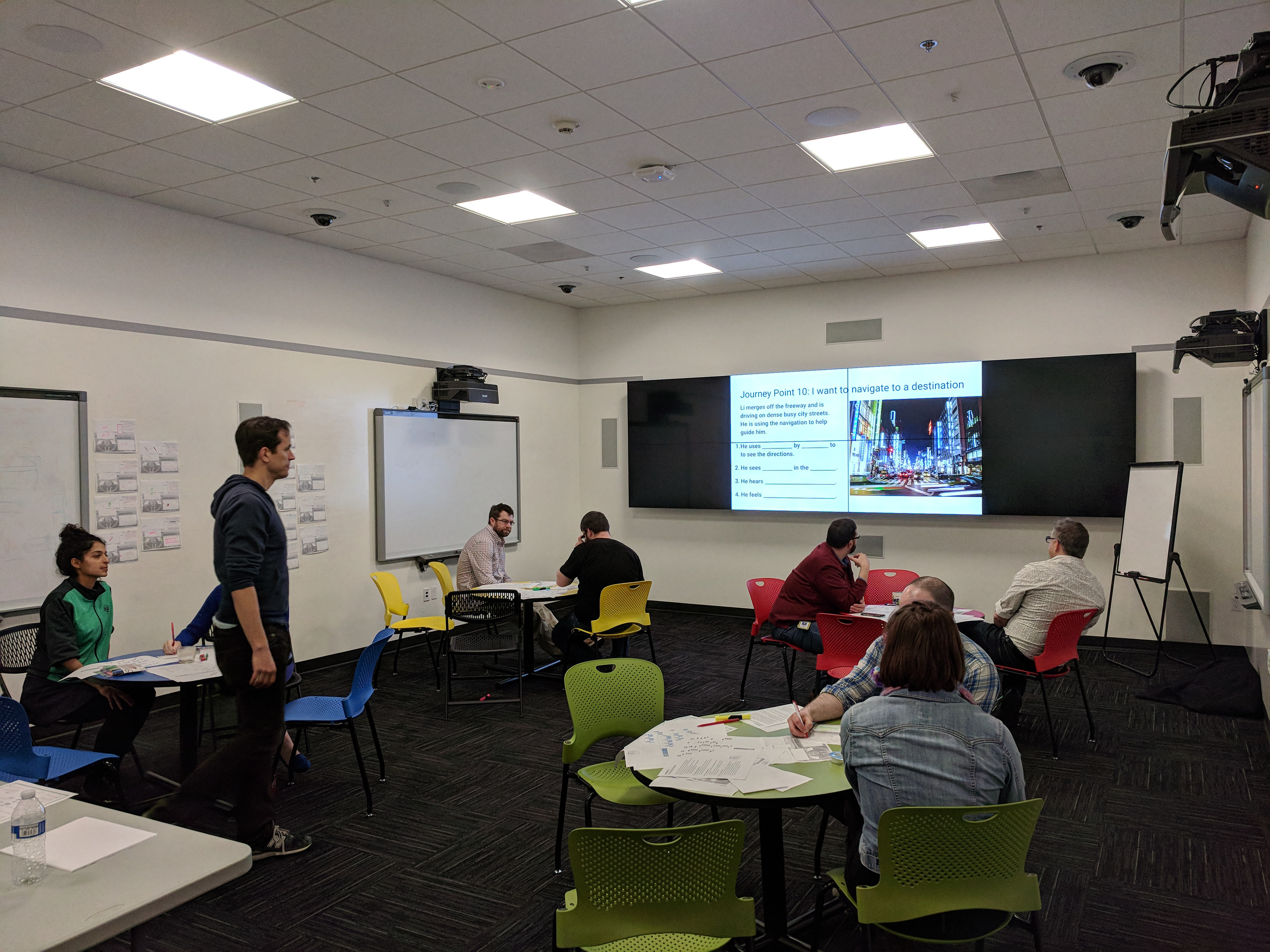
To generate the narratives, I designed and facilitated a cross-functional script development workshop involving:
designers
software developers
product leaders
management
Workshop Goals
Collect and prioritize future-facing scenarios
Translate prioritized ideas into experiential narratives
Inform:
video vignettes
future UX principles
emerging information architecture
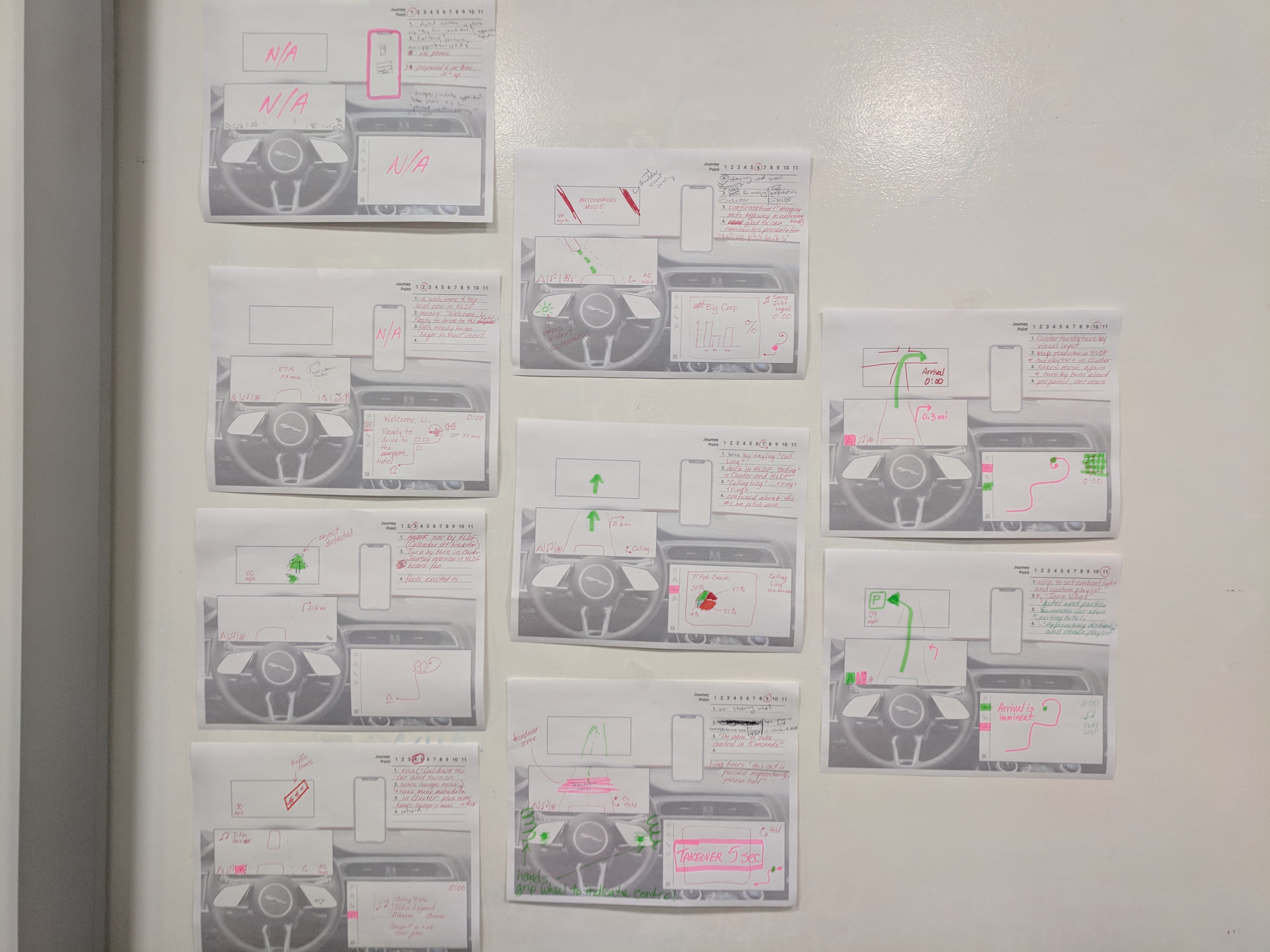
Participants were provided with structured templates to ensure ideas could be:
compared
debated
recombined
The workshop reframed scripting as a strategic act—not storytelling for its own sake, but a way to expose assumptions, tensions, and blind spots.
Output: Design Fiction as a Strategic Artifact
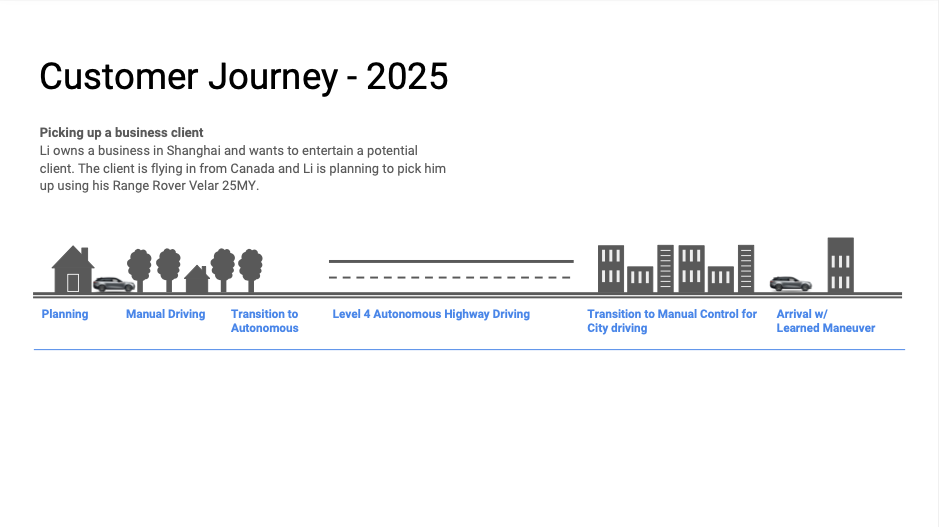
The resulting Design Fiction videos depicted near-future autonomous and advanced vehicle experiences, grounded in:
plausible technology
human behavior
social context
They were intentionally:
specific enough to provoke debate
open enough to avoid prescriptive solutions
Organizational Impact
Global Dissemination
The videos were published on an internal platform and viewed across the global organization—creating a shared experiential reference point.
Strategic Positioning
The work helped establish the Portland office as a strategic force in shaping the future of products, services, and experiences.
Requirements Maturity
One tangible outcome was the organizational decision to adopt modernized requirements-tracking software (Jama)—replacing spreadsheet-based practices.
Design Fiction revealed a core truth:
The organization needed better tools not just to track requirements—but to understand where they came from.
Product & UX Strategy Insight
This project demonstrated that:
Futures work fails when it bypasses sensemaking
Requirements fail when they lack narrative grounding
UX strategy must sometimes design the conversation, not the interface
Design Fiction functioned as:
a buffer between imagination and implementation
a translation layer between vision and requirements
a governance mechanism for future-oriented decision-making
Key Takeaway
The Autonomous Futures Design Fiction project was not about predicting the future.
It was about designing the organizational conditions under which future decisions are made—ensuring that ideas become shared understanding before they become requirements.
In complex product ecosystems, narrative is infrastructure.

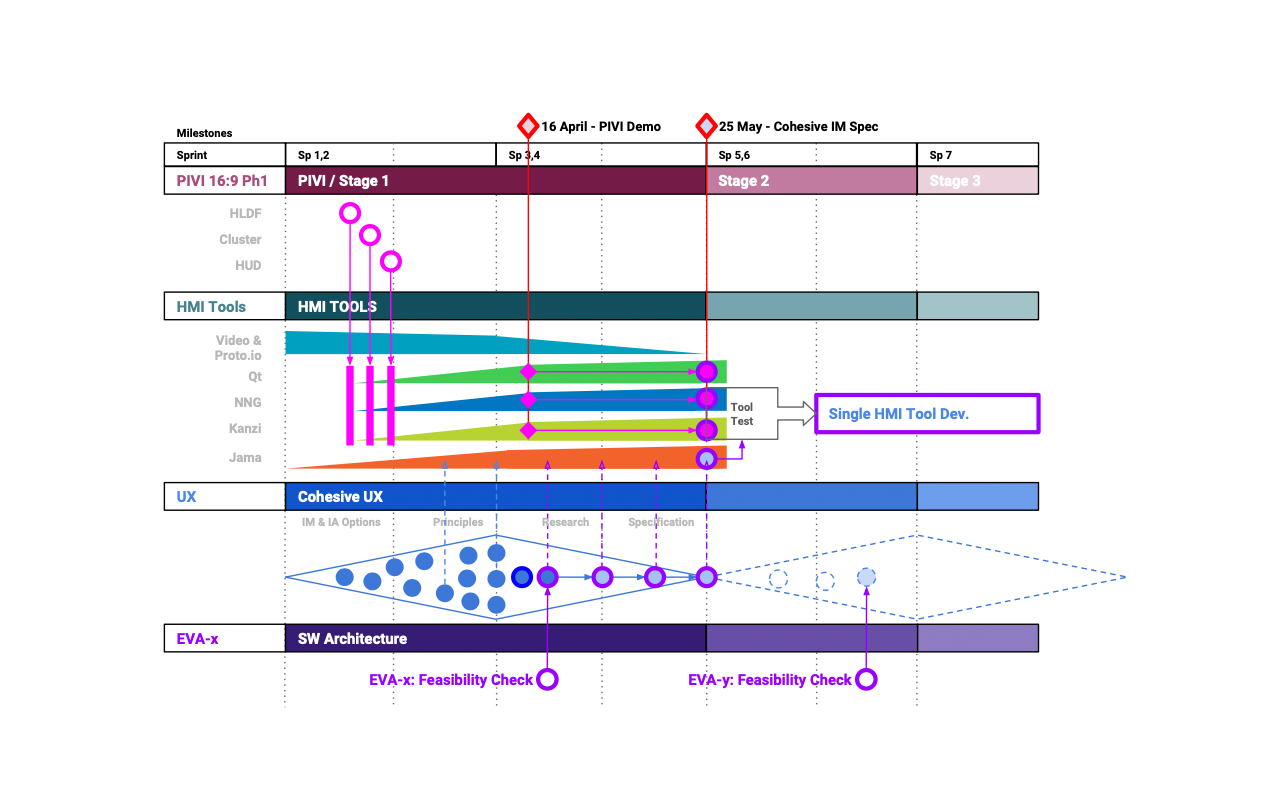
Early instances of the project roadmap aligned to the design sprint framework. My main focus was on rows two and three.
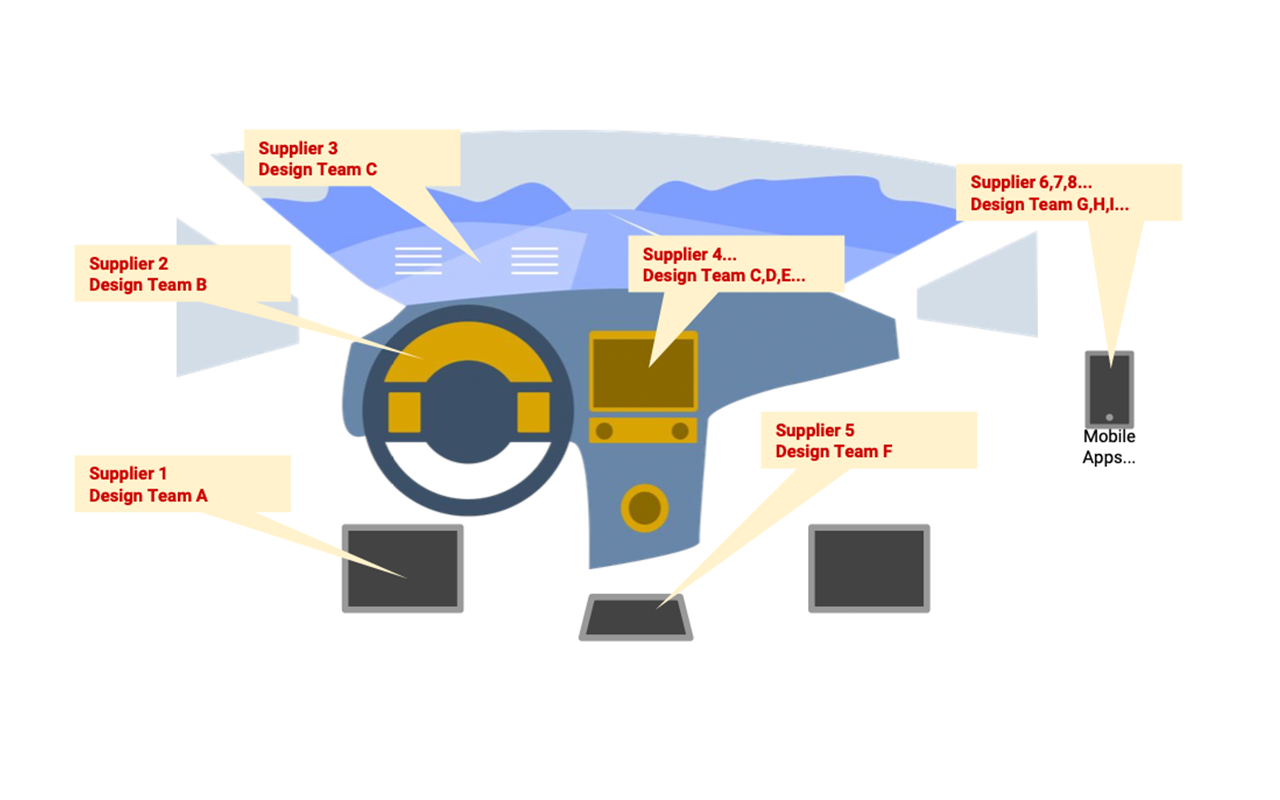
Mapping out the different design teams needed to support each surface and touchpoint and understanding the presence of each feature and application on each touchpoint.
Script Development Workshop
To develop a script, I designed, planned, and facilitated a workshop that included designers, software developers, and management.
The goals of the workshop included:
1. Add to and Prioritize a List of potential Scenarios.
2. Generate Scenarios from the Prioritized List - to be used as sources for Video Creation.
3. Inform the Video Vignettes, 2025 UX Principles, and Information Architecture.
2. Generate Scenarios from the Prioritized List - to be used as sources for Video Creation.
3. Inform the Video Vignettes, 2025 UX Principles, and Information Architecture.
Participants were provided templates to support concept generation.